Warning: the article presented here contains graphic details which may upset readers.
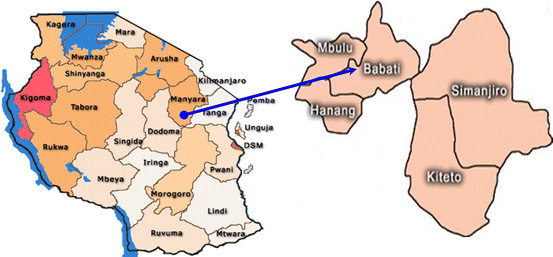
On March 17, I posted Tanzania court upholds death sentence in rural murder. A Babati man who had been found guilty of murdering his stepson for ritualistic purposes heard the final verdict for his crime: the capital punishment.
A few days later, Joseph Muhuila, an Iringa man, was given the same sentence by the High Court of Tanzania: death by hanging, for killing his four-year-old son, Timothy Muhulila, allegedly for ritualistic practices. The cruel crime occurred on April 12, 2025.
Iringa Region is one of Tanzania‘s 31 administrative regions, located in the middle of this East African country, in size comparable to e.g. Guinea-Bissau in West Africa. In 2022 the region had a population of about 1.2 million people.
So, within a short space of time, the law in Tanzania dealt decisively with ritual murderers who have been found guilty. On the one hand, this shows beyond any doubt that ritual murder does indeed occur in this country of over 70 million inhabitants, spread across more than 120 different ethnic groups. (There was, incidentally, no doubt about this, as Tanzania is often in the news for the wrong reasons due to the abduction, mutilation and ritual murder of people with albinism. Also see my 2019 post on the precarious position, discrimination, kidnapping and murder of people with albinism in Tanzania.) On the other hand, it is also a hopeful sign that the country’s highest authorities are serious about prosecuting the perpetrators of these violent crimes, which are based on superstition, greed and contempt for the right to life of innocent people, sometimes small children or other vulnerable individuals. (webmaster FVDK)
Iringa man sentenced to death for killing four-year-old son in ritual killing case
Published: March 18, 2026 By: Friday Simbaya – The Citizen
Unfortunately, Nigeria is not the only African country where persistent rumours and even hard evidence point to ambitious politicians who have resorted to ritual practices, including ritual murder, in order to achieve their goal of being elected. I have highlighted this on this site on several occasions referring to countries in West, Central and Southern Africa. See e.g. the following posts with respect to Eswatini (ex-Swaziland), Gabon, Liberia, Sierra Leone, Zambia.
In this light the warning of te President of the Pentecostal Fellowship of Nigeria, Bischop Wale One, must be understood. I wish to underline that his warning is not to be misunderstood: not every politician, elected or not yet elected, ambitious or not, in Nigeria or another African country believes in supernatural powers. Certainly, the majority doesn’t. But we also have to face a grim realty and that is the importance of bishop Oke’s statement. We cannot bury our heads in the sand regarding what is actually happening. It is precisely the involvement of certain politicians that stands in the way of a robust and effective crackdown on the phenomenon of ritual killings in a number of African countries. (webmaster FVDK)
2027: PFN President Bishop Wale Oke warns politicians against ritual killings
The President of the Pentecostal Fellowship of Nigeria, Bishop Wale Oke
Published: March 18, 2026 By: Wale Akinselure – Punch, Nigeria
The President of the Pentecostal Fellowship of Nigeria, Bishop Wale Oke, has warned that God’s judgment awaits politicians who resort to ritual killings and other violent means to gain power ahead of the 2027 general elections.
Oke, who is also the Prelate of the Calvary Grace International College of Bishops, spoke on Tuesday in Lagos while delivering a state-of-the-nation address to herald a special ministers’ empowerment conference organised by the college.
The cleric condemned what he described as “blood politics,” cautioning politicians against violence, killings, and fetish practices in their quest for power.
He said, “There is no position that you’re going for that is worthy of the blood of any Nigerian.
“There should be no politics of murder and killing. Present your case to the Nigerian populace, argue your case, promise whatever you want to promise, but don’t promise lies.”
He warned that any politician engaging in ritual practices or killings to win elections would face divine consequences.
“The age of going for fetish rituals is gone. We are praying for Nigeria that God will judge any politician that will resort to fetish things, ritual killings and murder to come to power,” Oke said.
Addressing voters, the cleric urged Nigerians, particularly youths, not to sell their votes during elections.
“Don’t sell your vote; your vote represents your political power and your future security. If you sell your vote, you are selling your future,” he said, adding that vote-buying would end if voters refused to participate in it.
Oke also called on the Independent National Electoral Commission to conduct free and fair elections without interference.
“Let INEC do its job as provided in the constitution. Let all parties go to the polls to test their popularity, and whoever emerges should be accepted,” he said.
The cleric further advocated a review of Nigeria’s constitution, describing it as flawed and not reflective of the country’s diversity.
“The Constitution was imposed on us and is unfair. It does not represent all Nigerians. If religion must be included, then all religions should be represented equally. Otherwise, let religion be a private matter,” he said.
Oke also alleged that killings in parts of the country had religious undertones and called for urgent action to address insecurity.
“If there is no Christian genocide, what is happening in Benue, Taraba, Borno and Plateau states?” he queried.
He urged Christians to actively participate in politics rather than remain on the sidelines.
“If we keep saying politics is dirty and refuse to get involved, then we are allowing it to remain dirty. Let us get involved from the grassroots and change the narrative,” he said.
He urged the Federal Government to cooperate with the United States to decisively deal with terrorists.
Recognising poverty as a problem, Oke urged the federal and state governments to heavily invest in education and the creation of jobs for the huge population of youths.
Rather than doling out bags of rice as empowerment, Oke urged the Federal Government to create jobs through the establishment of cottage industries in each of the 774 local government areas and the engagement of 1,000 people each.
He also called for support for youth entrepreneurs and farmers, while calling for massive investment in agriculture to ensure food security.
“We should no longer import a lot of things; we should be producing what we need. The economy should drive innovation as the distribution of rice is not a permanent solution to poverty,” Oke said.
Warning: this post contains graphic details which may upset some readers.
The following article, about the trial of a ritual murderer in Tanzania, was published in a Kenyan online newspaper. The author articulates very well what this is all about: the clash between modernity and archaic, harmful superstition. Reading of the article is highly recommended.
With respect to the death sentence in Tanzania: whereas the capital punishment is in accordance with the law in Tanzania, de facto there exists a moratorium on the actual execution. Those sentenced usually remain in prison for the rest of their lives.
The importance of imposing the death penalty lies primarily in its symbolic value and the deterrent it may provide, although I have serious doubts about the latter. (webmaster FVDK)
Shadows of Superstition: Court Upholds Death Sentence in Ritual Murder
A Tanzanian court has upheld the death sentence for a Babati man who murdered his stepson on the promise of wealth, highlighting a grave social crisis.
Published: March 16, 2026 By: Streamlinefeed – Kenya
The heavy doors of the Court of Appeal in Tanzania swung shut, effectively sealing the fate of Emmanuel Safari, a man whose actions in a quiet Manyara village shattered the sanctity of familial protection. In a chilling judgment delivered by Justices Winfrida Korosso, Lilian Mashaka, and Paul Ngwembe, the judiciary affirmed a death sentence for the murder of an innocent child, a crime rooted not in sudden passion, but in the dark, persistent belief in occult practices intended to manifest wealth.
This judicial affirmation serves as a grim marker of the persistent collision between modern legal standards and archaic, harmful superstitions that continue to plague rural communities in East Africa. For a one-and-a-half-year-old child in Babati District, the betrayal was absolute entrusted to his stepfather, he instead became the focal point of a lethal, misguided ritual. As the court documents detail, the child’s life was extinguished in a manner that defies comprehension, leaving behind a community grappling with the dual scars of grief and the unsettling reality that such practices remain a motivation for violence in the modern age.
The Anatomy of a Heinous Betrayal
The tragedy unfolded on March 21, 2021, at Maganjwa Village in Babati District. Emmanuel Safari, who had entered into a household with a mother and her two children, occupied a position of trust—a role that the prosecution proved he abused with devastating brutality. While the defense attempted to navigate the complexities of circumstantial evidence, the Court of Appeal found the narrative of innocence unsustainable.
Court records depict a harrowing timeline of the events leading to the child’s death. Safari, having been instructed by a local practitioner of witchcraft that ritual sacrifice would bring him prosperity, turned his attention to his stepson. The physical evidence presented at the High Court of Tanzania at Manyara and subsequently reviewed by the appellate judges was damning. Upon being rushed to Dareda Mission Hospital, the child exhibited severe internal trauma, including the penetration of the rectal intestine, accompanied by extensive swelling and bruising in the pelvic region. Safari, despite having been the sole caregiver in the hours preceding the discovery of the injuries, claimed ignorance of the cause—a defense that collapsed under the weight of medical and circumstantial scrutiny.
The Evidence Behind the Verdict
The legal process relied on the strength of circumstantial proof, a common necessity in cases where the victim is unable to speak and witnesses are scarce. The prosecution, led by Senior State Attorney Saada Mohamed, successfully argued that the chain of events left no logical room for an alternative perpetrator.
Incident Date: March 21, 2021
Location: Maganjwa Village, Babati District, Manyara Region
Victim Age: One-and-a-half years old
Legal Outcome: Death sentence for murder and unnatural sexual offence upheld by the Court of Appeal
Primary Evidence: Medical examination from Dareda Mission Hospital confirming physical trauma consistent with violent assault
The appellate justices underscored the necessity of the verdict by noting that the deceased was under Safari’s exclusive care during the timeframe in which the fatal injuries were inflicted. The lack of explanation for the child’s condition, juxtaposed with the timeline of events, led the court to conclude that the appellant was solely responsible. This ruling reinforces a zero-tolerance approach toward such crimes, signaling that no claim of superstition can mitigate the legal consequences of child murder.
The Societal Scourge of Occult Violence
This case is far from an isolated anomaly in the region. Across Tanzania and neighboring nations, the intersection of economic desperation and belief in witchcraft creates a dangerous environment for the most vulnerable, particularly children and the elderly. Human rights organizations, including the Legal and Human Rights Centre, have long documented how the promise of wealth, or the fear of supernatural curses, can drive individuals to commit horrific acts of violence.
Sociologists observing the region point out that rapid socioeconomic shifts, which have seen wealth disparities widen, often correlate with a resurgence in occult-linked crime. When traditional avenues for economic stability feel inaccessible, vulnerable populations are sometimes exploited by opportunistic individuals claiming spiritual authority. These “witchdoctors” provide a convenient, albeit deadly, mechanism for individuals to project their frustrations and desires onto defenseless victims.
The Legal Landscape and the Death Penalty
The imposition of the death sentence in this case brings into focus the complex legal reality of capital punishment in Tanzania. While the death penalty remains on the statute books, the nation has maintained a long-standing de facto moratorium on actual executions, with those sentenced often remaining on death row for decades or having their sentences commuted to life imprisonment.
However, the judicial commitment to handing down such sentences—and the appellate court’s refusal to overturn them—acts as a significant punitive statement. It sends a chilling signal regarding the gravity with which the Tanzanian judiciary views the murder of children. As the country balances international human rights obligations against the local demand for justice in the face of brutal crimes, the ruling remains a stark reminder that legal systems are evolving to prioritize the protection of the innocent above all else.
As Emmanuel Safari faces the finality of his legal journey, the tragedy in Maganjwa Village leaves behind an uncomfortable question: what further efforts are required to sever the link between superstition and violence in rural communities? Until the promise of occult shortcuts is replaced by tangible socioeconomic opportunity, the shadow of such tragedies will continue to loom over the most vulnerable among us.
The suspect stated that he acted possessed by a compulsive thought. “I always feel like cutting off a human head whenever the spirit arrives,” he said. However, authorities have confirmed that in a recent case the suspect allegedly mutilated the victim’s body, removing specific parts to be used for ritualistic purposes.
Hence it is not clear whether this murder qualifies as a typical ritual murder that forms the focus of the present site.
This site focuses on murders committed to perform ritual acts with the sole purpose of benefiting from them, out of superstition. Mentally unstable murderers therefore do not belong to this category of ritual murderers.
To be continued. (webmaster FVDK)
‘I feel compelled to behead people when possessed’: ritual killer confesses.
Published: March 14, 2026 By: MyOnline – Ghana
Cudjoe Hlolary, the fetish priest accused of the gruesome murder of a 41-year-old woman, Joyce Akua Amponmaa, in the Central Region, has offered a chilling justification for his actions, claiming that he experiences an uncontrollable, violent urge to decapitate human beings whenever he is under a spiritual trance.
In a disturbing confession following his arrest, Hlolary detailed a pattern of erratic behaviour linked to what he described as a malevolent spirit.
He admitted that the attack on the deceased, whom he acknowledged was a “good woman”, was not an isolated incident but rather the culmination of urges he had been struggling to suppress.
During interrogation, the suspect revealed that his internal conflict began long before the murder of Joyce Amponmaa. He alleged that he had previously been possessed by the same spirit and had come perilously close to killing his own brother.
“I always feel like cutting off a human head whenever the spirit arrives,” Hlolary stated, adding that he had previously managed to restrain himself but failed to do so during the encounter with the deceased.
The confession has deepened the sense of shock within the Awutu Bentum community in the Central Region, with many questioning how a man who openly admitted to harbouring homicidal impulses was permitted to operate as a healer for vulnerable members of the public.
The investigation into the case has revealed disturbing details regarding the treatment of the victim’s remains. Authorities confirm that the suspect allegedly mutilated the victim’s body, removing specific parts to be used for ritualistic purposes.
Police are currently pursuing leads to verify the suspect’s claims that these remains were transported to his hometown in the Volta Region. The investigation team is working in coordination with traditional authorities in the region to locate the alleged burial site.
The family of the deceased remains devastated by the suspect’s attempt to use “spiritual possession” as a defense.
Speaking to the media, relatives of the late Joyce Amponmaa dismissed the priest’s narrative as a calculated tactic to evade accountability for a premeditated crime.
Twenty-five years after Aidan Minter made his shocking discovery, the case has been revisited in a new documentary, The Body in the River, which aired on Channel 5 (article included below).
The murder mystery was never solved. The boy’s identity remains unknown, the perpetrator(s) got away with their heinous crime.
I present the following article published by MyLondon.new for reasons of completeness though it contains little additional news compared to my previous posts.
It is followed by a Daily Mail article on the recently released documentary ‘Boy in the Thames Case’, available on Channel 5.
However, this also contains few new facts. Hence, the mystery remains. (webmaster FVD)
‘I saw a decapitated boy dumped in River Thames – one thing left me in utter disbelief’
Published: March 13, 2026 By: Daniel Windham – MyLondon
Aidan Minter
Aidan Minter says he will never forget the day he saw a headless boy’s body floating in the River Thames, a horrific discovery that has remained unsolved for more than two decades.
A man who discovered the mutilated body of a young boy in the River Thames has described the moment he realised what he was looking at as one of the most horrifying experiences of his life.
More than two decades after the shocking discovery, the case has been revisited in a new documentary, The Body in the River, which aired on Channel 5. Despite years of investigation, the child’s killer has never been brought to justice.
The victim — later named “Adam” by police — is believed to have been between four and seven years old and originally from Africa. Investigators concluded he had been trafficked into the UK before being brutally murdered in what experts believe was a ritual killing.
The grim discovery was made on September 21, 2001, when IT consultant Aidan Minter was crossing Tower Bridge and noticed something unusual drifting through the water below.
At first, he thought the object might be a shop mannequin with a piece of red cloth attached. But as it passed beneath the bridge, the horrifying truth became clear — it was the torso of a child.
Handout photo issued by ITV London Tonight of a child, named Adam by police(Image: PA)
Recalling the moment years later, Minter said the injuries immediately shocked him.
He told the programme: “So when I saw the the body as it floated under, I remember thinking that the amount of damage that have been done to it was just incredible. I was just in utter disbelief.
“It’s quite alarming when you see it up close because I was only about 30 ft away from me at the time. And the incoming tide was quite fast but it was long enough to see all of that detail.
“All of the injuries that had been inflicted on that. I’ve never seen anything like that before. And. I’ll never forget it. But it is probably one of the most horrific things I’ve ever seen in my life.”
Police recovered the body further upstream near Shakespeare’s Globe Theatre later that day.
Forensic analysis revealed the boy had died after his throat was cut. His arms, legs and head had all been deliberately removed, and those body parts have never been found.
Investigators also discovered he had been fed a strange mixture shortly before his death. Tests showed it contained African river clay, ground bone, vegetation and traces of gold and quartz. He had also been given small amounts of Calabar bean — a toxic plant known as the “doomsday bean” — which can cause paralysis while leaving a victim conscious.
Houses of Parliament, Thames River and Westminster Bridge in London(Image: Getty Images)
Experts concluded the killing was likely ritualistic, possibly linked to a distorted form of spiritual practices sometimes associated with “muti” killings or certain West African belief systems.
The case sparked international attention, prompting an appeal from former South African president Nelson Mandela.
He said: “The boy comes from somewhere in Africa, so if anywhere, even in the remotest village of our continent, there is a family missing a son of that age who might have disappeared around that time please contact the police.”
Despite a number of arrests over the years, no one has ever been charged with Adam’s murder.
Former Metropolitan Police commander Andy Baker, who worked on the investigation, believes crucial evidence still exists somewhere in London.
He said: “When you think what that child went through, someone out there knows what happened. Whether that’s the murderer himself or those involved in the murder. There must be a crime scene somewhere. And it’s in London.
“There must be a place where Adam was laid upside down, tilted, head down, and then brutally dismembered and had his throat cut in such a violent way.
Andy Baker of Metropolitan Police(Image: Channel 5)
“There will still be traces of blood at that premises, so even now I’d appeal to anyone who knows anything. If they know where it is, we can go and get that forensic evidence. And then it starts again.”
Over the years, detectives uncovered evidence linking the boy to Nigeria. Pollen samples and scientific analysis suggested he had lived near Benin City before being brought to Europe.
A woman named Joyce Osagiede later admitted she had cared for the boy in Hamburg, Germany, where she purchased the distinctive orange shorts he was wearing when his body was found. However, investigators were unable to gather enough evidence to charge her or anyone else.
Multiple theories emerged, including the possibility that the child — whose real name may have been Ikpomwosa or Patrick Erhabor — had been trafficked before his death.
In 2006, Adam was buried in an unmarked grave in London.
Today, the case remains one of the most disturbing unsolved murders in British criminal history. For those who worked on it — and for the man who first spotted the body — the lack of answers still weighs heavily.
Detective Nick Chalmers, who was part of the investigation, said: “This was an innocent young child. There are people responsible for his death who haven’t been brought to justice. Twenty years on, I wish we knew the identity of Adam – and his parents. In reality, he is a missing child from a family, who probably don’t know he’s buried here in London.”
‘The Body In The Thames’ is available to watch and stream on Channel 5
The longest unsolved child murder case in modern UK history could still be answered because ‘someone out there knows what happened’, a retired detective has said.
‘Adam’ was a name given by Scotland Yard to a young boy whose dismembered body was discovered floating in the River Thames in London on September 21, 2001.
The child’s identity remains unknown 25 years later with no one ever charged despite an investigation that took police to South Africa, Holland, Germany and Nigeria.
Adam, who is thought to have been a Nigerian boy aged five or six, is believed to have been trafficked to the UK via Germany then murdered in a ritualistic killing.
His body, which had the head and limbs severed, was discovered near the Globe Theatre and numerous high-profile appeals followed, including by then President of South Africa Nelson Mandela.
Now, a new Channel 5 documentary called ‘The Body in The River’ which aired last night has re-examined the heartbreaking and disturbing story of Adam.
Despite a series of people being arrested, there has never been a charge over his murder – but police still believe the evidence they need is somewhere in London.
Andy Baker, a former Metropolitan Police commander who worked on the investigation, has told the programme that the case could still be solved.
The spot near the Globe Theatre where the boy’s torso was found in the River Thames in 2001A photo was released in 2011 claiming to be Adam – but this claim was withdrawn a year laterA police officer shows a pair of shorts found on Adam when his torso was discovered in 2001
He said: ‘When you think what that child went through, someone out there knows what happened. Whether that’s the murderer himself or those involved in the murder. There must be a crime scene somewhere. And it’s in London.
‘There must be a place where Adam was laid upside down, tilted, head down, and then brutally dismembered and had his throat cut in such a violent way.
‘There will still be traces of blood at that premises, so even now I’d appeal to anyone who knows anything. If they know where it is, we can go and get that forensic evidence. And then it starts again.’
The boy’s body was discovered by a passing businessman called Aidan Minter who spotted it while walking across Tower Bridge just ten days after the 9/11 attacks.
He initially thought it was a tailor’s mannequin, but realised it was a child’s dismembered and decapitated torso – and police pulled this from the water.
Investigations found the black boy could have been in the water for up to ten days after having his throat slit. His arms, legs and head were all amputated.
Police had few clues on his identity, other than a pair of orange shorts he was wearing – but appealed to the public for help, including on Crimewatch.
Some 60 people called the BBC show in an attempt to help and detectives offered a reward of £50,000 for information that led to a murder conviction.
Police also took specialist pathologist advice from as far afield as Africa and carried out groundbreaking work on DNA and pollen samples inside the body.
Officers established that the boy had been drugged with a ‘black magic’ potion and sacrificed in a voodoo-style ritual killing before being thrown into the Thames.
They used pioneering techniques to trace radioactive isotopes in his bones to his native Nigeria – and even asked Mandela to appeal for information, which he did.
But they always struggled to identify the boy, despite travelling to Nigeria to try to trace his family. Detailed analysis of a substance in the boy’s stomach was identified as a potion which included tiny clay pellets containing small particles of pure gold.
Andy Baker, a former Metropolitan Police commander who worked on the Adam investigation, has told a new Channel 5 documentary that the case could still be solved 25 years laterA graphic prepared by Scotland Yard detectives investigating the murder of Adam in 2001ITV News tracked down Joyce Osagiede in Nigeria in 2011, and she said Adam was the boy in the photo – and his real name was Ikpomwosa, although withdrew this claim one year later
This indicated that Adam had suffered a Muti ritual killing, when a victim’s body parts are removed and used by witchdoctors as ‘medicine’ based on a belief that the body parts of children are sacred. The bodies are then often disposed of in flowing water.
Another theory was he was a human sacrifice linked to Yoruban beliefs in Nigeria, in an offering to the goddess Oshun – typically associated with water and fertility.
Police had a breakthrough in July 2002 when social workers in Glasgow were alerted to the safety of two girls living with their African mother Joyce Osagiede.
She had ritualistic objects in her home and spoke about cults, killings and of sacrifices during a family court hearing – which led to police searching her property.
Detectives found clothes with the ‘Kids & Company’ label – the same one as on Adam’s shorts – and in the same sizes as his clothing. Osagiede was then arrested.
Officers never charged her, but by December that year police had determined his birthplace to a strip of land around Benin City in Nigeria – Osagiede’s home city.
German police discovered she had lived in Hamburg until late 2001 – the city where the orange shorts found on Adam’s body were believed to have been purchased.
Osagiede was eventually deported after the Home Office rejected her asylum application but disappeared after arriving in Lagos on a chartered private jet.
Officers found she had a contact in her phone for a man called Mousa Kamara, and discovered evidence of Nigerian rituals known as Juju at his London home.
Kamara, whose real name turned out to be Kingsley Ojo, was arrested but released on bail because there was no evidence directly linking him to Adam’s murder.
Police did however charge Ojo with people smuggling and using fake documents to obtain a passport and driving licence. He pleaded guilty and was jailed for four years.
Kingsley Ojo was arrested but released on bail because there was no evidence directly linking him to Adam’s murder. Police did however charge Ojo with other offences and he was jailedDetective Inspector Will O’Reilly and John Azah lay a wreath on the Thames for Adam in 2002
While in prison, Ojo contacted police and said he wanted to help track down the killer, feeding them information for two years following his release. But officers eventually determined they could not rely on him, and he was deported back to Nigeria in 2008.
By 2011, another lead came when police searched through Osagiede’s belongings left with a friend in Germany and found a photo of a boy aged about five taken in 2001.
ITV News tracked down Osagiede in Nigeria, and she claimed Adam was the boy in the photo – and his real name was Ikpomwosa. She said she looked after him then gave him to a man called Bawa. But detectives could not positively identify the boy.
One year later, Osagiede’s brother Victor contacted BBC News and said the boy in the photo was in fact not Adam or ‘Ikpomwosa’. A reporter travelled to Benin City and found Osagiede, but she appeared confused and gave two other names for Adam.
Osagiede also identified someone in photo as ‘Bawa’ – which was actually a picture of Ojo. The BBC then tracked down Ojo in Nigeria but he continued to deny involvement in Adam’s murder and no evidence has ever linked him to the crime.
Since 2013 the investigation has become a ‘cold case’ with no significant new lines of enquiry – and Victor confirmed in 2020 that Osagiede had died in Nigeria.
Police launched an appeal on the 20th anniversary, with Detective Chief Inspector Kate Kieran saying the case remaining unsolved was ‘incredibly sad and frustrating’.
Speaking in 2021, she added: ‘We recognise people may not have wanted to speak up at the time and may have felt loyal to the person or people involved in this.
‘However, over the past 20 years, allegiances and relationships may have changed and some people may now feel more comfortable talking to us.’
The case has remained unsolved since then, but Scotland Yard will be hoping that the documentary could change this. The Daily Mail has contacted the force for comment.
‘The Body In The Thames’ is available to watch and stream on Channel 5
Reportedly, the suspect, a spiritualist who allegedly inherited his father’s deities, confessed the ritual murder. The victim, his girlfriend, was found with body parts mutilated and missing. A source, present at the site where the victim’s body was discovered, reported that her head, hands, legs, private part had all been cut off (source: Eyewitness details how spiritualist allegedly killed girlfriend at Bentum, GhanaWeb, dated March 12, 2026).
This ritual murder case follows a previous one, which occurred two weeks ago. A newborn baby was found dead in a nearby community with body parts missing.
As a result, fear has struck the region. When will the perpetrators strike again? Who will be the next victim? Who are the perpetrators? (webmaster FVDK)
Spiritualist arrested over suspected murder of woman in Awutu Senya District
Published: March 12, 2026 By: myjoyonline.com
Police in the Central Region have arrested a man in his early twenties, identified as Horlali Alatusa, in connection with the suspected killing of a woman believed to be his girlfriend at Bentum in the Awutu Senya District.
The suspect was apprehended after a farmer lodged a complaint about a strong and unpleasant odour coming from a section of his farmland, raising suspicions among residents.
According to community members, some residents escorted the suspect to the farm on Tuesday, March 10, where they attempted to locate the body by digging a trench believed to have been earlier created by him. However, the initial search did not produce any results.
The situation was later reported to the police after residents noticed bloodstains around the area that had been dug, further deepening suspicions of foul play.
Police investigations subsequently led to the arrest of the suspect, who allegedly confessed during interrogation and directed officers to another location where the body of the deceased had been concealed.
The remains of the unidentified woman were discovered with several parts of the body mutilated.
Some residents suspect the killing may be linked to ritual practices, noting that the suspect is known in the community as a spiritualist who reportedly inherited his father’s deities.
Eyewitnesses who spoke to the media said the deceased had last been seen in the company of the suspect in the community on Sunday before she suddenly went missing.
Angered by the discovery of the body, some residents vandalised and demolished the suspect’s residence.
Police have since conveyed the remains for further examination while the suspect remains in custody to assist with ongoing investigations.
Fear in Awutu Bentum: Spiritualist Arrested Over Suspected Ritual Killing – YouTube
Residents of Awutu Bentum in the Central Region are gripped by fear following a series of suspected ritual killings in the community.
Police have arrested a spiritualist, Horlali Alatusa, in connection with the suspected murder of an unidentified woman believed to be his girlfriend. Residents became suspicious after the woman suddenly went missing and a foul stench was noticed from the suspect’s farm. After interrogation, the suspect reportedly led police to a spot where the decomposing remains of the victim were discovered.
The disturbing incident comes just two weeks after a newborn baby was found dead in a nearby community with body parts missing, deepening concerns about safety in the area.
Screenshot – to access the YouTube video, please click here
When I first read the article presented below and published by the Guardian, entitled ‘The children are not safe here’, about a Nigerian couple – Olusola and Chinwe Stevens – fighting infanticide in their own home country, I remembered an earlier article describing this courageous couple and their admirable work. In 2018, to be precise on May 9, 2018, I published a post entitled ‘Nigerian couple working to eliminate infanticide in Nigeria‘, on two Christian missionaries, Steven Olusola Ajayi and his wife Chinwe who in 2004 had opened a shelter for so-called ‘evil children’, the Vine Heritage Home.
Without any doubt, this is the same couple and the same home presented in the 2026 Guardian article below. The 2018 article on the missionary couple was originally published on a website called ‘This Is Africa’. It was an opinion-article. Unfortunately, the exact title is missing. lIn 2018 I had juist started the present site on ritual killings, superstition, witchcraft, infanticide and human rights, and – with hindsight – at that time there was still lack of a systematic presentation.
Unfortunately, the original 2018 article no longer exists on he internet. This is precisely the reason why I have opted for the actual approach to copy-paste articles selected for my postings (together with my comments), as I had this experience before. See the section Why publish this site?
Infanticide is a crime, caused by ignorance and superstition. Nigeria is certainly not the only African country where systematic infanticide exists, i.e. the systematic killing of small children, babies. I regularly read about infanticide in other countries where sometimes desperate mothers kill their newborns. But the shelter created by Olusola and Chinwe Stevens, VIne Heritage, is for other babies whose life is threatened: new born babies who are considered ‘evil’ children, who are believed to be bad omens. Babies with disabilities, albino babies, twins, are suspected to bring curses and bad luck. Hence… they are killed, buried alive, or ‘simply’ disappear.
I express my deep respect to the Stevens couple and am convinced that their work is not in vain and that it will ultimately contribute to the eradication of a terrible crime that has existed for too long. (webmaster FVDK).
If you would like to support The Guardian financially, please click here.
‘The children are not safe here’: the Nigerian couple fighting infanticide
Triplets Paul, Pauline and Paulina at the Vine Heritage Home Foundation, Gwagwalada, aged six months in July 2025. Photograph: Adesegun Adeokun/The Guardian
In a few isolated communities in central Nigeria, some babies are believed to be bad omens. Olusola and Chinwe Stevens run a thriving home for babies at risk. But what happens when the families want them back?
Esther Stevens’ life nearly ended as soon as it began. She was born in 2007, in a village on the outskirts of Abuja, Nigeria’s capital city. Her mother died giving birth to her, and in the eyes of some villagers, that meant the baby was cursed. According to tradition, there was only one way to deal with such a child. The villagers tied the newborn to her mother’s lifeless body and prepared to bury them together.
When word reached a Nigerian missionary living in the community, she rushed to the burial site and pleaded for the baby’s life. After the villagers and relatives refused, she appealed to the traditional priest who had been called on to perform the rite. “Finally, the priest agreed and said, let them give her the evil child and see what the child will become,” Esther said. “The child, that’s me.”
The missionary took Esther to a children’s home in Abuja run by a Christian couple, Olusola and Chinwe Stevens, who brought her up as their own. Today, Esther is 18, tall, with a broad smile. She laughs easily and has a quick sense of humour.
In Nigeria, children are widely regarded as gifts from God or the spirit world, but according to some traditional belief systems, certain children were once thought to bring misfortune. Children born with albinism, visible deformities or disabilities were said to bring curses, or to be omens sent from ancestors or deities. In parts of southern Nigeria, particularly among the Igbo, twins and triplets were feared. Although these beliefs have largely faded, in isolated pockets of the country, they persist. In some of these communities, says the human rights activist Leo Igwe, the death of the mother in childbirth is believed to be the fault of the child.
The couple who run the children’s home where Esther grew up have been confronting these practices since 1996. Sent by the Christian Missionary Foundation to Abuja, the Stevenses discovered that some children were still being killed: poisoned, abandoned to starve or buried alive. In 2004, they created the Vine Heritage Home Foundation, a refuge for vulnerable children. Twenty years later, they provide a home for more than 200 children.
When Nigeria moved its capital from Lagos to Abuja in 1976, the new site was presented by the government as a neutral location, symbolically distant from centres of ethnic and regional tensions. But less than 40 miles away from this gleaming modern capital, with its wide boulevards and high-rise buildings, are communities that become nearly impassable in the rainy season. Many of these communities depend largely on subsistence farming, and the few healthcare facilities are poorly equipped and understaffed. According to Olusola, 75% of the children living in Vine Heritage are there because their mothers died in childbirth. (Nigeria is “the most dangerous country in the world to give birth”, according to UN data from 2023, which shows that one in every 100 women dies during childbirth or shortly after, many from postpartum haemorrhage.)
After their shocking discovery, the Stevenses began going around the communities, begging the families to hand over to them any of the “cursed” children rather than kill them. Then they began to speak with other local missionaries, asking them to spread the word that they were willing to take in any child deemed evil.
One of their contacts, missionary Andrew Tonak, told me that Chinwe is one of the most open-hearted people he has met, a mother and leader whose counsel, generosity and instinct to give have touched countless lives. Tonak is 61, and has lived in Kaida village, about 40 miles west of Abuja, since 2000. He recalled visiting women who had just given birth to twins. On his next visit, he would often be told, “The children are no more. They died.” Over the years, he says he has rescued 20 children from the village and neighbouring communities.
By the time some of the children now at Vine Heritage were rescued, they were already weakened by poisoning or severe malnutrition. Most required urgent medical attention. But increasingly, communities are becoming aware of the Stevenses’ work and now bring newborns to them directly, before harm can come to them.
Olusola said: “On their own, they come asking, ‘Please, where is that house where they keep the children?’ And then they bring them.”
Today, Vine Heritage is home to more than 200 children, from newborn to young adults. The oldest, Godiya, is 21 and has been at Vine Heritage since she was a baby. The newest arrival before my visit, a baby born on 27 May 2025, has been fighting for her life in a hospital crib since the day she was brought to the home.
About four years ago, Vine Heritage moved from a cramped facility that was originally designed to accommodate 55 children, to a much larger compound in Gwagwalada, built with funding from the EU in partnership with global charity ActionAid. The home has 18 dedicated staff working in shifts to provide round-the-clock care for the babies and toddlers. In a spacious hall, everyone gathers for morning prayers, group meetings and TV time. (Like any home full of children, there’s a constant battle for control of the remote.)
As I followed Olusola on a tour of the neatly laid-out grounds, he moved in a sprightly fashion, his greying beard framing a warm smile. At the youngest children’s dormitory, a chorus rang out: “Daddy! Daddy! Daddy!” They are not allowed out unaccompanied, and their small faces were pressed against the windows.
Esther Stevens, 18, who has been living at the home since birth. Photograph: Adesegun Adeokun/The Guardian
The multiple-birth siblings all have names that sound alike: Victor and Victoria, Mabel and Bethel, Zion and Zipporah. Among the youngest residents are triplets named Paul, Pauline and Paulina. Their parents arrived at the home one morning about six months ago, cradling the newborns in their arms. “I asked, ‘Why did you bring them?’ They said, ‘We don’t want them to die,’” Olusola recalled. The parents have visited once since then. They love their children, but fear that if the babies remained in their village, they would be killed.
Esther is clearly a favourite among the younger children. They love to follow her around and clamber on to her back, and as she and I chatted, they hovered close by. Esther knew nothing of her true origins or how she had come to live in the house until she was 14. She had been among the first children to arrive, joining the household in 2007 when there were only nine or 10 others. Olusola and Chinwe have one biological child, Praise, now 24 and studying at university. In those early years, Esther assumed she was also their biological daughter. As more children joined over time, she believed she was simply growing up in an orphanage run by her own parents. All the children bear the surname Stevens. “I knew it was an orphanage home, but I thought I was their real child. I look like mummy,” she said, and she does share some resemblance to Chinwe, with the same complexion.
Esther’s illusion was shattered when members of her biological family unexpectedly arrived at the home. At the time, the missionary who had rescued her as a newborn was preparing to leave the community. Before departing, she contacted Esther’s biological family to ask if they wanted to see where she had taken their child, knowing that once she left, they might never have the chance. “My grandmother came from the village and said she wanted to see me,” Esther recalled. “She wanted to see if I was still alive. When she told my father I was alive, he came to see with his own eyes.”
To prepare her for the meeting, Olusola sat her down and told her the truth about her past. “I was more than shocked,” she said quietly. “I felt sad. I felt bad.” Wanting to know more, Esther asked for her file. She read it cover to cover. What hurt most was discovering that her family had never come for her in all the 14 years she had been there. “Finding out about my parents’ true identity … It was just … I shed tears because they didn’t even care.”
Kaida, a village in Gwagwalada, is the closest community to Abuja’s city centre where there is evidence that infanticide may still sometimes take place. There are no tarred roads to the village, and the route is rough and bumpy, but it is better connected than most. There is a patchy phone signal here.
In Kaida, I met Abubakar Auta, a father of 13 and a husband to two wives. His twins Eric and Erica were sent to Vine Heritage about seven years ago. Like almost every adult in Kaida, Abubakar and his wife, Amina, farm for a living. To supplement their income, Amina digs sand from the river to sell to builders. She arrived to meet me straight from her work, dripping wet, sand clinging to her bare feet. Of her husband’s 13 children, seven are hers. Abubakar said he sent the twins away to “save their mother from suffering”. He believed they would not be safe in Kaida. Speaking to me in Hausa through a interpreter, he explained, “If I had left my children here, people would keep their eyes on them, and that would make them a target.” (Eric later died at the children’s home after falling ill.)
Kaida village has solar power, which provides a few hours of electricity each day for its two clinics: one government-run, the other operated by missionaries trained in community health. The government facility stands silent and empty. Locals say its staff are rarely present. The missionary clinic, by contrast, is alive with activity.
While I was there, a community health worker tended to a woman whose young grandson had a toe injury, the wound still raw and red. The woman had told me earlier on, in her home, that she had previously given birth to three sets of twins. All of them died within months. “They just fell sick,” she said. “In a short time, they were dead.”
Olusola Stevens with some of the children at Vine Heritage Home in Gwagwalada, July 2025.Photograph: Adesegun Adeokun/The Guardian
Her eldest child in his early 20s, sitting nearby, looked up and interrupted. “It was an evil hand that killed them,” he said, his tone defiant. At his words, his mother fell silent and turned her face aside, making it clear she wanted no part in that line of conversation.
The village head described the killing of children as belonging to “a time when people did not know these children were human beings”. He repeatedly used the phrase “in those days” to explain that their “eyes are now open” and such killings no longer happen. (He confirmed that the practice continued until at least a little more than 10 years ago, and that his “those days” referred to the years before then. Lakai has served as village head for the past 26 years.)
Community members are reluctant to speak openly, whether out of fear of stigma, distrust of outsiders, or the sensitivity of exposing cultural taboos. What I was able to piece together from these guarded, euphemistic conversations suggests that decisions involved a mix of family elders and traditional religious leaders. Leo Igwe, the human rights activist, acknowledged the role of patriarchy in situations where women surrender their babies to die. In 2019, ActionAid ran a survey in 57 villages around Abuja in which 16% of male respondents openly expressed support for the practice.
The shroud of secrecy has made it hard to tackle these beliefs. When I contacted various government officials, each one said they had never heard of such practices. Infanticide is against the law, but enforcement is hampered by secrecy and denial. Arinze Orakwue worked for nearly 20 years for the state body responsible for rescuing vulnerable children. From the early 2000s, he visited many communities where infanticide is practised, meeting with traditional chiefs and local leaders in an effort to change entrenched beliefs. “Many of them are living in denial. They tell you that it used to happen in their community a long time ago but it doesn’t happen any more.”
As more children were brought to their home, the Stevenses realised the scale of the problem. In 2013, when they decided to speak publicly about infanticide, the Federal Capital Territory government summoned them, accusing them of spreading falsehoods and damaging Nigeria’s image, just to attract attention and donations. Yet this scepticism faded after officials were shown clear evidence. The government eventually commissioned the couple to run awareness campaigns in the affected communities. They have built new partnerships, most notably with ActionAid. “The greatest problem is denial,” said Andrew Mamedu, ActionAid’s Nigeria head. “The community will insist, ‘Oh, there’s nothing like that.’ But when you go there, you see the evidence. You see the altars to the dead twins. Sometimes, the parents can’t account for their children. They are pregnant and before you know it, they’ve given birth and the baby is gone.”
ActionAid’s approach to the problem was patient, practical and deliberately indirect. Staff set up committees in each community – made up of men and women, young people, traditional rulers and religious leaders – and framed their aim as community development. “We don’t start with infanticide because they would just drive us away,” Mamedu said. The teams began by focusing on livelihoods, education, hygiene and access to healthcare, and only then moved on to tackling infanticide, under the broader banner of maternal and child health. Committee members acted as local advocates. One of their most effective tools was radio, still the most widespread and trusted source of news in northern Nigeria.
Chinwe Stevens at home.Photograph: Adesegun Adeokun/The Guardian
The strategy produced some measurable gains. In two communities ActionAid’s advocacy helped secure government investment in health centres. In four communities, the killings gradually stopped. Parents who had handed over children returned to the home to ask for them back. New local “champions” began to emerge, ordinary people willing to speak up. Still, the effort had its limits. Resistance from influential elders persisted, and when funds ran short in 2022, much of the work was left unfinished.
The Stevenses continue to work closely with missionaries stationed across the area. But not all rescues come through Christian networks. In Godiya’s case, it was a Muslim cleric who stepped in. “The Islamic preacher went to the community to preach and make converts, just like I do,” Olusola recalled. “He saw a child strapped to the dead body of her mother. They were preparing the grave. He asked, ‘Please, this child, what happened?’ They told him she was an evil child, and that their culture was to bury such children with their mothers. He said, ‘Can you permit me? Let me call my pastor friend so he can come and pick up the child.’ So he called me, and we went to the community and took her.”
When the Stevenses first established the Vine Heritage Home, their vision was simple: to raise the rescued children as their own and, once they were older, return them to their communities so they could become agents of change in the very places that had once rejected them. In recent years, 36 children have been returned to their families. In each case, the families themselves came asking for the children. But reintegration is rarely smooth. For one thing, many of these rural communities speak local languages understood by few outsiders.
When Esther visited her family in Dako village for the first time in December 2021, she met her siblings: two older brothers, two older sisters, and a younger sister. She was the only child from her mother, who had been the last of her father’s three wives. Two of her siblings were already married with children. They were glad to see her, but communication was difficult. “I couldn’t talk with them because they speak Basa,” she said. Only her elder brother could speak English, because he was in school.
The contrast in education was stark. When Esther told them she was in her third year of junior secondary school, they thought she was lying; most of the people her age in the village were still in primary school.
At Vine Heritage, every child goes to school. Of the current residents, 182 are enrolled, from primary and secondary pupils to university students like Godiya, who is studying sociology at Nasarawa State University, just across the border from Abuja. Godiya dreams of a career that comes with a uniform – any one will do. Esther has just finished secondary school and hopes to begin university later this year to study law. For many like her, returning to their villages would probably end those dreams.
Sometimes, a compromise is possible. Fifteen-year-old Mabel and Bethel spend their school holidays in Kaida village with their family, then come back to the home once classes resume. Their family first came to reclaim them when they were 10 years old. “I was happy, but I was not happy,” Bethel said. “I was happy that I had seen the place where they gave birth to me, but I was not happy to leave here,” she added. “Whenever I go there, nobody disturbs me, but I always want to come back.”
Beyond communication difficulties, the adjustment to rural life can be harsh. Children accustomed to running water, electricity and regular meals must fetch water from streams, adapt to harder living conditions, and endure the curiosity or suspicion of villagers.
The Stevenses usually wait until they consider the children old enough to understand before telling them how they came to the home. When Godiya turned 17, in 2021, her people came looking for her. “At first I said I was not going to see them because for how many years they did not come,” she recalled.
Gloria, 11, playing with other children at Vine Heritage Home.Photograph: Adesegun Adeokun/The Guardian
“It took us two hours to convince her,” Olusola said. “I pleaded with her, telling her that their coming was a sign of progress.”
Since then, Godiya has stayed in touch with her family, but she only made her first trip back in January 2025. Without proper roads, the only way to reach Bari village was by motorbike. Hours after leaving Gwagwalada, she finally arrived exhausted, and the entire village gathered to stare. “Everybody was just looking at me,” she said. “I didn’t understand the language and the journey was stressful. They were speaking, but I didn’t understand them.”
The youngest of nine children, Godiya was welcomed with joy by her older sisters, who embraced her through tears. They urged her to come back for Christmas, but she was dismayed by the lack of electricity or phone network, and currently has no plans to return.
Esther’s experience in Dako was similar. “When I went to the village, everybody came to see me,” she said. Some of the stares unsettled her. “The community was scary. The way some villagers look at you, as if there’s some evil thought in their mind. I was so scared because I didn’t want anything to happen to me.”
Sometimes, the danger is real. Four years ago, eight-year-old Monday was sent back to his village at his grandfather’s request. Monday’s mother had died giving birth to him. The family had recently converted to Christianity, and after Monday’s father remarried, the grandfather felt it was the right time to bring home the boy once deemed “evil”. But just two weeks later, Monday was returned to Vine Heritage. The elders in the village had been resentful, asking the grandfather how they should feel when others had killed their own children but he had brought his back alive. Fearing for the boy’s safety, the grandfather decided it was better for him to leave. “He called me and said, ‘I am returning your child to you,’” Olusola said.
When a family asks for their child back, the Stevenses try to find out if it is safe for them to return. But they cannot prevent every tragedy. About eight years ago, the Stevenses visited a mother who had recently given birth to an albino girl. She assured them that attitudes towards albinos in her community had changed in recent years, so they did not insist on bringing the new baby to the home. “I was asking questions: has anybody threatened you or the child? She said no,” Olusola recalled. Shortly afterwards, word reached him that the baby had died without explanation. He has never been able to discover what happened.
The years have taken their toll on Chinwe and Olusola. About two years ago, Chinwe’s health began to deteriorate, and Olusola urged her to move into a small flat nearby so she could focus on recovery. During school holidays, two of the oldest children, including Godiya, take turns staying with her, helping with everyday needs, while the others visit in small groups from time to time.
Chinwe has had a stroke, developed high blood pressure and undergoes regular dialysis. I visited her in the modest flat where she lives alone, after spending her entire married life surrounded by dozens of children. She spoke candidly about how she poured herself into caring for others while neglecting her own health. Apart from the small income the Stevens received as missionaries, they earned nothing, relying entirely on donations to care for the children. Now, Chinwe herself depends on donations to cover her medical expenses.
On the walls hang photographs of her in a graduation gown, taken when she earned her doctorate in agriculture from the prestigious University of Nigeria, Nsukka. Another, from two years ago on her 59th birthday, shows her nearly three times her current, frail size. Pointing to one, she said softly, “Look at me then, and look at me now.” She managed a wry laugh.
Olusola said the home had its future leaders among the older children, those willing to step up and already involved in administration and management. Some, he explained, had made it clear that even after graduating from university, they intended to remain committed to running the home. Whenever he was away for meetings, they kept things running. Unless visitors specifically asked to see him, the children received guests, handled day-to-day operations, managed money and accounts, and reported back to him. “The only thing they can’t do is sign cheques,” he said. “I have already told them that in the next 10 years, I will sit back and the home will be in their hands.”
Most donations to Vine Heritage come from individuals. On the day I visited, a donated cow stood in the compound. But with Nigeria’s soaring inflation, now at its highest in nearly three decades, many longtime supporters have cut back or stopped entirely. “Sometimes, when you phone people to remind them of their promise to pay school fees, they get irritated,” Olusola said. “Because of Nigeria’s economy, some of the people that used to support the home before are now finding it difficult.”
Mamedu, at ActionAid, believes the issue is more complex. The challenge, he says, lies in how the home is run. It is neither a formal organisation nor a business. There is no business plan, governance structure, or consistent paperwork like a typical NGO or charity would have. It is registered as a foster home. There are no clear systems for tracking how funds are spent or how accounts are managed.
“We supported the home to try to institutionalise the process,” Mamedu said. “We trained the staff on hygiene, childcare, some record keeping, even partner management. From the start, we told Olusola, let’s have a central way to account for every fund that comes in, so that when we say we don’t have money, it’s backed by proper records. But he tells us that this is not an orphanage; it’s a home.”
ActionAid still supports the home, providing monthly funds for food and covering urgent medical bills for the children. But the future is uncertain. The Stevens’ family-first approach has undoubtedly saved lives and nurtured emotional bonds among the children, Mamedu believes. But the original vision of reintegrating children into their communities appears to have faltered, which means the home keeps growing. Olusola admits that he once believed those communities would be more developed by the time the children grew up. He had expected more progress.
I asked Olusola if he would have done things differently. “When God asks you to do something you only obey,” he said. “It never occurred to me that we would ever have more than 20 children. After saving seven children, we had a pause of about one-and-a-half years, and we thought that would be all. We made our decision that whatever we gave to our biological child, we would give the rest.” But after the seven-year hiatus, Olusola recalled, “the floodgates opened, and more children started coming”.
King Mswati III (born in 1968, crowned king in 1986) is Africa’s last absolute monarch. He rules with his mother, Queen Nfombi. King Mswati III renamed his country then called Swaziland to Eswatini in 2018.
King Mswati III introduced a number of measures and changes which brought some relief to the country that had been ruled by his father, King Sobhuza II, with an iron fist since independence from the British in 1968. Officially, Sobhuza II was King of Swaziland for 82 years and 254 days, the longest verifiable reign of any monarch in recorded history.
King Mwsati’s s rule is not undisputed. In fact, his lifestyle and human rights violations have been criticized at several occasions. However, as the story below tells, he showed positive leadership – ‘leadership by example’ – in advocating the rights of people with albinism.
At various occasions I have drawn attention to the precarious position of people living with albinism in Africa. They are discriminated, bullied, attacked, and sometimes killed – murdered, as some people believe that their body parts can bring luck, wealth, prestige or power.
For this reason I wish to commend King Mswati III and the Queen mother for their precious example and I hope that the example given by Their Majesties will not only be followed by the people of Eswatini but also in neighboring g countries where the position of people with albinism is also threatened by prejudice an superstition. (webmaster FVDK)
King Mswati III
Cultural leadership confronts albinism discrimination head-on
People living with albinism together with those living with disabilities at the recently ended Incwala Ceremony. Eswatini customs and culture prohibited such communities of people from getting closer or inside royal residences. His Majesty King Mswati III has since changed this long-held custom to accommodate people living with albinism and disabilities (Pic: Sibusiso Shange)
Published: February 18, 2026 By: Khaya Simelane – Times of Eswatini
MBABANE – In Eswatini cultural visibility is becoming protection for people with albinism and a tool to dismantle stigmatisation.
A new breath of fresh air is changing and shaping the narrative around a community long confined to the periphery and deep fear.
For decades, thousands of Africans born with albinism have mastered the art of invisibility. Whether at communities, schools, sports and everywhere, they have, out of their will, been forced to remain invisible, even if against their will.
From a young age, they have been made to feel different. With many labels around them prevalent across African communities, none has driven them to remain invisible than the one recently introduced in which they are labelled ‘ma-Millions’.
This labelling, though sometimes uttered jokingly, relates to the widespread belief that the body parts of people living with albinism are ‘powerful’ to make one a millionaire.
According to Menzi Sukati, founder of the Albinism Society of Eswatini (ASESWA), the prevalent belief that people with their condition are sources of wealth is exactly what perpetuates their killing.
As a result, he said from a tender age, most commonly in the rural villages and crowded locations, they have grown up calculating risks before stepping outside, either to play or hang out with their peers.
Night travelling is strictly discouraged while during elections, many of them keep a low profile, he added.
This stems from an entrenched myth across the continent that has portrayed people with albinism as mystical beings whose body parts can generate wealth, political power or supernatural protection.
Those myths have fuelled ritual attacks, mutilations and killings that have left families traumatised and communities fractured.
King’s counter-image efforts
At last year’s Umhlanga Ceremony and again during the recently concluded Incwala, the country’s most sacred cultural ceremony, people living with albinism were visibly invited and welcomed.
According to Senior Archivist and Cultural Anthropologist Lethumusa Simelane, King Mswati III has once again stood in the moment of time and embodied inclusivity and Ubuntu.
Simelane stated that what the Monarch has done can not only be limited to only fighting stigmatisation against people with albinism.
Instead, the King has moved beyond the acceptable norm to harmoniously review and relax some of the country’s cultural traditional practices governing ceremonies and royal residences (tigodlo).
“When talking about what the King has done, we must never forget that growing up, we knew that certain people were not allowed closer or inside royal residences,” said the anthropologist.
He explained that culturally, such beliefs had nothing to do with the person’s natural being, however more with the foundational systems governing African monarchies.
“Therefore, the King, cognisant of the changing times reached the a difficult decision by appealing to the custodians of our culture and sought their permission to relax some of these practices. The King realised that he cannot be a King to some, while others are pushed away from him,” said Simelane.
The renowned Eswatini historian likened the King to the Biblical Christ, who, despite Jewish law and beliefs decided to defy and dine with people with leprosy.
The historian underscored that when respected leaders, like the King publicly contradict myths; they shift social norms more effectively than legislation alone.
In his remarks, he confidently stressed that the King had once again become the symbol of Ubuntu and a true father, sending a strong message that there was no place for uncultured beliefs in the kingdom.
Transformative
Simelane added that in a region where visibility can invite danger, the sight of them standing confidently at the centre of national tradition carried unusual weight.
He said for a community accustomed to the margins, standing at the heart of culture can be transformative. Against this continental backdrop, he said the kingdom’s recent cultural inclusion offers a sharply contrasting image.
Incwala is not just a festival in the casual sense. It is a deeply spiritual ceremony (prayer) centred on kingship, renewal and national unity.
Participation, therefore, signals belonging to the moral and cultural fabric of the nation.
In many African societies, stigma is often justified in the language of tradition. When harmful myths are rooted in culture, dismantling them requires trusted cultural authority.
In Eswatini, the monarchy remains one of the most influential institutions across rural chiefdoms and community structures.
The images of people with albinism participating in the recently ended Incwala Ceremony deserved to be applauded, and for the King to be formally appreciated, according to Simelane.
In a continent where some children with albinism have been relocated to boarding schools for protection, being publicly welcomed into a royal ceremony reframes belonging.
Myth
Albinism is a rare, genetically inherited condition characterised by little or no production of melanin in the skin, hair and eyes. It is non-contagious.
In sub-Saharan Africa, an estimated one in 4 000 people are born with the condition, although prevalence varies by country.
The condition brings medical vulnerability, particularly to skin cancer and visual impairment in equatorial climates.
To every observer, the King has outdone the Tanzanian Government and instead of the courts he used culture to dismantle stereotypes around albinism.
According to an article by researcher Charlotte Baker published in The Conversation, human rights violations against people with albinism in Tanzania have included discrimination, verbal abuse, exclusion from education and health services, as well as killings, abductions, mutilations and even grave exhumations to obtain body parts for sale.
The violence has prompted Tanzanian and international civil rights groups to file a case before the African Court on Human and Peoples’ Rights against the Government of Tanzania, arguing that it had failed to protect this minority.
The court found that, although some steps had been taken, the state violated the right to life by failing to protect them as required under Article 4 of the African Charter.
It also ruled that Tanzania breached the right to non-discrimination by not doing enough to combat myths and stereotypes.
The ruling ordered nationwide awareness campaigns for at least two years, amendments to the 1928 Witchcraft Act to criminalise attacks, implementation of a national action plan, improved access to health services including sunscreen and eye care, educational support, and the establishment of a compensation fund for victims.
Baker notes that since 2007 more than 700 attacks and killings across 28 countries have been reported to the Canadian organisation Under the Same Sun, although many cases go unrecorded.
In Tanzania alone, there have been 209 reported attacks since 2007.These numbers tell a story of fear that extends far beyond one country.
Government driving advocacy
Meanwhile, the Eswatini Government has intensified its efforts towards promoting the rights, welfare and inclusion of people with albinism.
On February 13, 2026, the Deputy Prime Minister (DPM) Senator Thuli Dladla received a donation of sunscreen lotions and protective lip balms donated by the kingdom’s TV station to people with albinism.
The DPM, when accepting the donations extended her appreciation to the Monarch for leading the way, noting that it was pleasing to see organisations and entities across the country take leaf and follow in the footsteps of the King and Queen Mother.
“The gesture by Their Majesties has affirmed to all and sundry that people with albinism are human too. Even the doubting Thomas’s that were pushing them away from Their Majesties and the country’s cultural practices have been silenced,” said the DPM.
Dladla mentioned that by extending the cultural space to people with albinism, the Monarch did more than host guests. It publicly affirmed that they are part of the kingdom’s identity.
According to Dladla, Simelane and Sukati, the King has done more than spearhead a law meant to protect, promotes and embrace people with albinism, as well as their rights.
Advocacy efforts have included sunscreen donations and awareness campaigns, recognising that ultraviolet exposure poses a serious health risk.
Without melanin, skin is highly susceptible to damage and untreated skin cancer can drastically reduce life expectancy.
The DPM further stressed that indeed inclusion of people with albinism at high-profile events must translate into action and policy.
A senior traditionalist when contacted stated that when the highest traditional authority in a country affirms the dignity of people with albinism, it sends a message to rural homesteads and urban neighbourhoods alike.
Commenting anonymously as no formal appreciation has been extended to Their Majesties as per culture; the traditionalist joyfully appreciated the inclusion of the albinism community in cultural activities in order to fight the stigma around them.
The well-known traditionalist mentioned that for a child born with albinism in the country today, the image of participation in Incwala or Umhlanga offered a counter-narrative to fear.
“Instead of being told to hide, that child can see proof of belonging,” he said.
Legal obligation
According to the Office of the United Nations High Commissioner for Human Rights (OHCHR), the United Nations (UN) body mandated to promote and protect human rights globally, people with albinism continue to face widespread discrimination rooted in ignorance, superstition and harmful myths.
The OHCHR states that persons with albinism are often denied equal access to healthcare, education and legal protection. In some regions, they are reportedly subjected to extreme violence fuelled by false beliefs about their condition.
It emphasises that governments have a legal obligation to protect them, prosecute perpetrators of attacks and implement comprehensive strategies to eliminate stigma and discrimination.
In recognition of these challenges, the UN General Assembly proclaimed June 13, as International Albinism Awareness Day in 2014, observed annually since 2015.
The day seeks to raise global awareness about albinism, combat myths and misconceptions while further promoting the rights, dignity and inclusion of persons with the condition.
Through this international observance, the UN calls on states and communities to shift from silence and superstition to protection, awareness and meaningful inclusion reinforcing the principle that people with albinism are human beings entitled to life, equality and full participation in society.
Meanwhile, the African Union (AU) has adopted a strong human-rights-based approach to combat discrimination and violence against persons with albinism across the continent.
Through its Regional Action Plan on Albinism in Africa (2021–2031), formally adopted by the AU Executive Council in 2019, the continental body seeks to end attacks and other human rights violations targeting persons with albinism.
The framework focuses on four key pillars, namely; preventing attacks, protecting victims, ensuring accountability for perpetrators and promoting equality and non-discrimination.
The AU recognises albinism as a disability and situates protection measures within its broader disability rights framework, including the Protocol to the African Charter on Human and Peoples’ Rights on the Rights of Persons with Disabilities in Africa.
It also highlights the heightened vulnerability of women and children, calling on member states to implement specific protective measures.
In coordination with the United Nations and civil society organisations, the AU urges African governments to adopt national action plans, strengthen legal systems and intensify public awareness campaigns, particularly around International Albinism Awareness Day on June 13, to confront the root causes of stigma and violence.
Together, these continental and global efforts underscore a growing commitment to replace myth and marginalisation with protection, dignity and full inclusion.
Complacency
Still, some scholars across the continent have warned against romanticising the moment. Across Africa, attacks have sometimes declined only to resurface during periods of economic hardship or political contestation.
Election cycles in certain countries have historically coincided with spikes in ritual violence fuelled by rumours that charms made from body parts can secure victory. (Italics and bold letter-type added by the webmaster FVDK).
Structural inequality, unemployment and desperation create fertile ground for exploitative myths.
“The real test is whether people with albinism feel secure in remote communities, whether police respond swiftly to threats and whether courts prosecute offenders consistently,” noted one scholar.
The African Court’s ruling against Tanzania has set a legal precedent across the continent, signalling that states have enforceable obligations to protect persons with albinism. It reinforces that attacks rooted in superstition are not cultural nuances but human rights violations.
At the same time, Eswatini’s cultural inclusion demonstrates that tradition can be mobilised in defence of dignity.
The controversial South African politician Julius Malema is the founder and leader of the Economic Freedom Fighters (EFF), a black nationalist political party that adheres to communist principles and goals. The EFF is the fourth-largest party in the National Assembly. Julius Malema hails from Limpopo Province, where he was born in 1981. After the passing of his mother, a single parent, he was raised by his grandmother.
On Tuesday, February 24, during a joint session of the National Assembly and the National Council of Provinces, he made a number of attention-grabbing statements which can’t surprise since coming from the mouth of an – orally gifted – opposition politician. While Malema didn’t spend many words on ‘muti murders’, he was clear in his condemnation of them. The connection he made with local government elections is no coincidence, even though we must realize that he was primarily speaking as an opposition politician. South Africa isn’t the first or only SSA country where political elections are accompanied by an increase in ritual killings. Sadly, the existence of a link between politics and ritual murder is a reality in a number of African countries.
For the sake of clarity, I want to emphasize here that this last comment should not be interpreted as an accusation against all politicians and political candidates. I’ve said before on this site that we must be careful not to generalize.
But we cannot deny reality either. (webmaster FVDK)
South Africa: opposition politician and EFF leader Julius Malema condemns ritual killings ahead of local government elections
EFF leader Julius Malema warned President Cyril Ramaphosa, condemning ritual killings (image: EFF)
Published: around February 24, 2026 By: Simon Majadibodu – The Mercury, South Africa
Economic Freedom Fighters (EFF) leader Julius Malema has sent a stern warning to President Cyril Ramaphosa, saying that as long as the red berets remain in Parliament, the Phala Phala scandal “will never die.”
Malema made the remarks during a joint sitting of the National Assembly and the National Council of Provinces on Tuesday afternoon, as MPs debated Ramaphosa’s recent State of the Nation Address (SONA).
The debate will continue on Wednesday at 2pm, with the president expected to reply on Thursday at 2pm.
“Mr President, we warned you eight years ago that the Oppenheimers and the Rupperts would neutralise you, and your legacy would be that you auctioned our country and its strategic assets to the highest bidder. You did not heed our warning,” Malema said.
“You have auctioned our sovereignty to asset management companies such as BlackRock, which is why you have praised the growth of the Johannesburg Stock Exchange (JSE).”
Malema accused Ramaphosa of selling state infrastructure, including ports, railways, and energy generation capacity, to the private sector, and warned that water could be next.
He said the president had failed to take responsibility for creating jobs.
“You do not take responsibility for fighting crime. You do not take responsibility for infrastructure development, and you do not take responsibility for growing our economy,” he said.
“There is no sign of any infrastructure for a bullet train, no design plans for a smart city, and not even a curriculum for the institution of higher learning in Ekurhuleni, as you promised.”
Malema said, “You asked us to send you Thumamina, and we made a mistake. And as your term of office comes to an end, you have nothing to show for it.”
He criticised Ramaphosa’s handling of crime, saying that deployment of the South African National Defence Force (SANDF) to Gauteng and the Western Cape is a last resort.
“You are admitting that you have failed to fight crime. The people of Gauteng have been terrorised for too long by the so-called Zama-Zamas, and on the deployment of the army, we have no choice but to support you, because you have destroyed law enforcement capacity.”
Malema questioned whether the military, weakened by austerity measures and humiliated abroad, could tackle crime domestically.
“Our concern is, how do you deploy a military which has been crippled by austerity measures to fight crime? Because we know that our military is under-strained and under-resourced, and has been humiliated in war zones abroad. How do you intend to ensure they can fight crime domestically?”
He noted that the army is trained for combat, not civilian law enforcement.
“The scale of crime in our country cannot be dealt with by the army alone, because crime is a national crisis and a social crisis. If we do not resolve the challenges of unemployment, alcohol and substance abuse, and the high drop-out rates of youth from schools, then crime will be a permanent feature in our society.”
“Crime in South Africa is organised through drug syndicates, protection fee rings, sex trafficking rings, and gangs. It has infiltrated all forms of government, and putting guns in the streets alone will not resolve this crisis,” Malema said.
He added that the root of the problem in the criminal justice system begins with Ramaphosa’s own political party.
“The biggest syndicate is the political party you are leading, Mr President… Mr President, subjectively, this government has done nothing to grow this economy or to strengthen our courage.”
Malema said it was important to remind Ramaphosa of his own commitments.
“Last year, on this same platform, you committed to grow the economy by 3% through infrastructure investment, structural reforms, and inclusive growth and employment.”
“You no longer speak of this figure, and the National Treasury itself predicts economic growth at 1.5%, and will most likely revise this projection downward as the year progresses, because that is their tradition.”
He said Ramaphosa presents a budget surplus as a positive economic indicator, but this reflects austerity rather than progress.
“Why would you be proud of a budget surplus in a country with massive unemployment, collapsing municipal infrastructure, and poverty which is leading to the death of children in the Eastern Cape?
”Your pride when it comes to EPWP jobs is something you should be ashamed of and not mention at this level of governance. Those are temporary jobs which are used to secure income for volunteers of your political party.”
Malema criticised the insecurity of Expanded Public Works Programme (EPWP) jobs.
“It enslaves jobs with no security because it cannot secure a car or a home with an EPWP job.”
He said the electricity crisis in South Africa is far from over.
“The mistake you are making in declaring an end to the electricity crisis is the same mistake you have made with the water crisis for decades in this country.”
“Now that the people of Sandhurst no longer experience an electricity outage, you no longer view it as a crisis, forgetting the people of Soweto, Mdantsane, Seychelles, and Ditsobotla.”
He claimed Ramaphosa had given load shedding a new name: “load reduction.”
“On top of that, you have lost control of the pricing regime of electricity, and Nersa is announcing an increase in the cost of electricity every few months.
“Your municipalities do not have an idea of the infrastructure they are seized with governing. It does not matter how many billions of rands you give them to revive water infrastructure.”
Malema said ministers and mayors lacked knowledge of town planning and water infrastructure.
“The fact of the matter is your minister and your mayors do not know the town planning of where water infrastructure begins and where it ends. This is why they respond to burst pipes and leakages as they happen and run after one pipe to the other.”
He praised EFF MMC for water in Ekurhuleni, Thembi Msane, who has been declared a “water champion.”
“When your minister (Pemmy Majodina) was running around complaining about water, our MMC of water in Ekurhuleni was given an award the same week and declared a water champion.”
“Instead of benchmarking from the DA, which struggles to provide clean water to people in the city, go and benchmark from the EFF department in Ekurhuleni on how to fix the water crisis.”
Malema said municipalities will not be fixed unless the equitable share model is revised.
“The idea that all municipalities can be self-reliant on revenue generation when you preside over a country that is massively de-industrialising and suffering massive unemployment is misguided.”
He called for stronger municipal capacity and recovery of revenue from major industries, offering incentives to industries for investing in municipal infrastructure.
Malema said the EFF supports Ramaphosa’s posture on international relations, including support for Palestine, Western Sahara, South Sudan, and Cuba.
“We agree with you that Africa must begin to negotiate its trade relations as a bloc and with unity, and that no nation must ever think it has the right to bully us and impose on us who our friends must be and who our enemies must be.”
He condemned xenophobic violence and ritual killings ahead of local government elections. (italics and bold letter-type added by the webmaster FVDK).
“They must ask their friends who came here with the name of killing foreigners. They did not win elections. Xenophobia will never win elections, and some of them are found in your cabinet.”
Malema urged Ramaphosa to take concrete action against Israel.
“You must exhibit your courage by closing the Israeli embassy, which is a resolution of this nationalism. You have declared their representative persona non grata, and the skies did not fall. Close their embassy and cut relations with this genocidal nation.”
He criticised the US diplomat, calling the appointment “rampant racism” and asserting the country has the right to refuse cooperation.
Malema said the Phalaphala scandal had rendered Ramaphosa ineffective in dealing with corruption and incompetence.
“When Dr Zweli Mkhize was found to be involved in a digital pipe scandal, you did not have the courage to remove him. He resigned. Today, Zweli Mkhize is chairperson of the Portfolio Committee on Cooperative Governance and Traditional Affairs.
“While David Masondo was identified as being a key part of corruption in the State Security Agency by the Zondo Commission, you did not remove him. Today he is Deputy Minister of Water and Sanitation.”
He also criticised the handling of suspended Police Minister Senzo Mchunu and minister of Water and Sanitation Pemmy Majodina, accusing Ramaphosa of creating task teams instead of exercising consequence management.
“If you have the courage to remove her, remove her now so that you demonstrate that you’ve got the courage.”
Malema slammed Gauteng Premier Panyaza Lesufi for suggesting citizens shower at hotels during water outages.
However, Lesufi later apologised.
“When you assumed office, you claimed it would be a transparent presidency, then proceeded to sell CR17 documents of your campaign and block investigations on Phalaphala. Where’s the transparency?”
“Let me reassure you, Mr President: as long as the EFF is alive and in Parliament, Phalaphala will never die.”
The EFF has long called for the Constitutional Court to release its delayed judgment on the Phalaphala matter, accusing the judiciary of undermining constitutional supremacy.
The party centres on the 2020 theft of an estimated R10 million from Ramaphosa’s farm and the alleged unlawful cover-up, arguing that delays in the impeachment-related case heard in November 2024 have eroded public confidence in the judiciary.
Traditional healers Mandla Lekhuleni popularly known as Prof Lekhuleni, Rei Magoxa Mozambique and Sefadi Mohami are to be commended for their outspoken condemnation of ritualistic violence, muti murders and sexual abuse of women and children. Likewise, police sergeant Nomsa Katekani Macevele did a great job in bringing to justice an unscrupulous father who violated and raped his own daughter.
It is hearthening to realize that we should not tar all sangomas with the same brush. It is never correct to generalize!
Notwithstanding the foregoing, the article below also establishes beyond any doubt that South Africa and South Africans face a harsh reality: sexual violence, accusations of witchcraft, child mutilation, human sacrifice and muti murder are no exception in this southern African country whereas in some case sangomas play a perverse role in these heinous crimes. The present site contains numerous examples proving this observation to be correct. (NB Use the dropdown menu under ‘African countries’ to access all posts on South Africa). (webmaster FVDK)
Sangomas strongly condemn abuse as Limpopo father raped teenage daughter after rituals at a grave
Published: March 2, 2026 By: Jonisayi Maromo – IOL, South Africa
Traditional healers Mandla Lekhuleni popularly known as Prof Lekhuleni, Rei Magoxa Mozambique and fellow traditional healer Sefadi Mohami during a gathering in Ekangala, City of Tshwane, where they united in condemning muthi murders, ritual killings and the abuse of women and children, saying such acts have no place in African traditional healing. (Image: Jonisayi Maromo/ IOL)
The Malamulele Regional in Limpopo court has imposed a life-term imprisonment against a 44 year-old man who was accused of raping his 17-year-old biological daughter at Matiyani village.
Provincial police spokesperson, Colonel Malesela Ledwaba, said on 20 September 2023 at about 5 pm, the victim was at home with her parents when her father decided to take her to a graveyard to perform rituals at her grandfather’s grave.
The name of the rapist father is withheld to protect the identity of the abused child from secondary victimisation.
“On their arrival at the graveyard, the accused (father) performed the rituals and finished in the evening at about 21:00. Afterward, the duo retreated to their residence, and while walking in the bushes, the accused grabbed his daughter and suddenly raped her,” said Ledwaba.
“Following the horrendous act, the victim was threatened and instructed not to tell anyone about the incident.”
After a year of silence, the abused teenager ultimately revealed the ordeal to her uncle’s wife in February 2024.
The incident was reported to the local police and immediately transferred to the Giyani family violence, child protection and sexual offences (FCS) unit.
“Sergeant Nomsa Katekani Macevele was assigned to investigate the matter, and through her indefatigable efforts, the 44 year-old male accused was apprehended the next day on 20 February 2024,” said Ledwaba.
Macevele successfully opposed bail until the accused father was sentenced to life-term imprisonment by the Malamulele Regional Court on Tuesday. Police in Limpopo have welcomed the harsh sentence.
Provincial commissioner of police in Limpopo, Lieutenant General Thembi Hadebe (Image: SAPS)
In some instances, children are sexually abused as part of so-called rituals falsely believed to provide healing or prosperity for the perpetrator.
Traditional healers, commonly known as sangomas, are often implicated in these heinous acts. Some have been arrested by the South African Police Service, while others have been attacked by community members when such incidents come to light.
“Speaking the truth does not break any friendship or a spaza shop. Those people using body parts of children or albinos — that is a crime. There is no such thing. Since I started practising, I was never taught that if you want money or your business to grow, you must kill someone or use human blood. That is 100% criminal,” he said.
He rejected claims that human sacrifice or abuse of women and children forms part of African traditional healing.
Traditional healer Mandla Lekhuleni popularly known as Prof Lekhuleni, condemned muthi murders, ritual killings and the abuse of women and children, saying such acts have no place in African traditional healing. (Image: Jonisayi Maromo/ IOL)
“I hear people saying sangomas use human sacrifices to make people rich. That is not what I learnt or what my gobela taught me. I was taught to go to the mountains, to rivers, to dig and collect medicine from nature — herbs that help uplift a person who is down,” he said.
Traditional medicine and rituals are widely believed across South Africa and in Africa to help cure illnesses or improve people’s livelihoods. Lekhuleni, who has a large social media following, regularly shares content about traditional healing practices.
“In my indumba (traditional room where a sangoma practices), you will never find even a small human bone. Killing someone to make another person rich is not African traditional medicine. African traditional medicine uses herbs, sometimes combined with iziwasho ,” he said.
“That is pure criminality, and I am willing to assist the police. Wherever such so-called traditional healers are found, I will work with the police to ensure they are arrested and never practise again. They must never see the light of day.”
Lekhuleni said traditional healers across the Southern African Development Community were increasingly alarmed by the rise in so-called muthi murders and were working together to combat the practice.